Industria trends
2026-06-18
Ambulate in omnem fere facultatem motorum electricorum, soleatus, fans, vel gearboxes, incedere et forte forte est. (VI) Ferens quiete opus. As one of the most widely produced deep groove ball bearing sizes, it has become a default component for engineers designing compact, high-speed rotating assemblies.
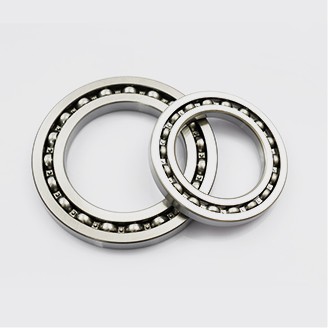
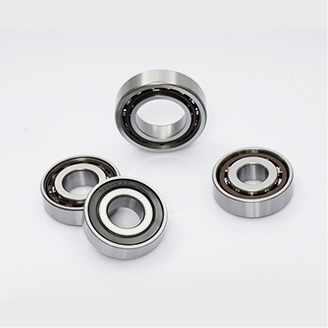
A 6000 bearing is a deep groove ball bearing with a 10mm bore, 26mm outer diameter, and 8mm width, used to support radial loads and moderate axial loads in compact rotating assemblies. Its small footprint and simple single-row ball design make it a common choice for applications where space is limited but reliable rotation is still required.
Typical uses include small electric motors, household appliances, power tools, fans, conveyor rollers, and instrumentation equipment, anywhere a small shaft needs smooth, low-friction rotation under light to moderate loading.
Ita, 6000 portatio ad applicationes altae celeritati apta est. Its small bore diameter and lightweight ball complement keep rotational mass low, which directly translates into a higher limiting speed compared to larger bearing series of similar load class.
Standard open or shielded 6000 bearings can typically operate at limiting speeds well above 20000 RPM under grease lubrication, with sealed and specialized variants reaching even higher under oil lubrication.
This high-speed capability is one of the main reasons the 6000 series is favored in small electric motors and spindles, where rotational speed is often the limiting design factor rather than load.
The load capacity of a 6000 ball bearing depends on the internal design, ball size, and material, but standard ratings provide a useful baseline for comparison across common bearing sizes.
| afferens Location | Dynamic Load Rating | Static Load Rating | Limitandi Volo (Grease) |
| 6000 | 4.55 kN | 1.96 kN | 22,000 RPM |
| 6001 | 5.10 kN | 2.36 kN | 20,000 RPM |
| 6002 | 5.59 kN | 2.85 kN | 19,000 RPM |
Dynamic load rating reflects the load a bearing can handle for a defined number of rotations before fatigue, while static load rating reflects the maximum load it can support without permanent deformation while stationary. Ad applicationes machinae generalissimas, 6000 rating dynamicae gerentis marginem amplum supra sarcinas operativas typicas praebet.
Under continuous operation within its rated load and speed limits, a properly lubricated 6000 bearing commonly achieves a calculated service life of tens of thousands of operating hours. Vitalis actualis graviter a tribus factoribus pendet: onus applicatum quoad facultatem aestimatam, celeritatem operandi, et condicionem lubricationis.
Yes, the 6000 bearing is widely used in small electric motors and pumps, particularly fractional horsepower motors, circulation pumps, and cooling fans where shaft diameters around 10mm are common. In these applications, the bearing supports the rotor shaft radially while accommodating the light axial loads that occur from magnetic centering forces or impeller thrust.
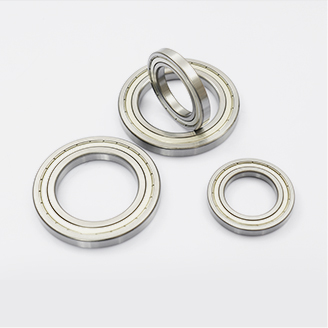
Sealed variants, often designated with Z or 2RS suffixes, are particularly common in pump applications where moisture or fine particulate contamination is a concern, since the integrated seals protect the internal grease and rolling elements from the operating environment.
Series 6000 et 6200 eandem 10mm partem ferebant, sed in altiore involucro et onere notae differunt.
Ad applicationes prioritizationis firmitatis et celeritatis gyrationis, a (VI) Ferens is generally the better fit, while the 6200 series is selected when the housing bore allows for slightly larger dimensions and the application calls for additional load margin.
Nostrum provisum products
Contact Us
Tel: + 86-13916786238
Fax: 86-21-68551629
Email: [email protected]
Add: Huangxu Industrial Area, Dantu, Zhenjiang urbem, Jiangsu Province, Sina
Industries